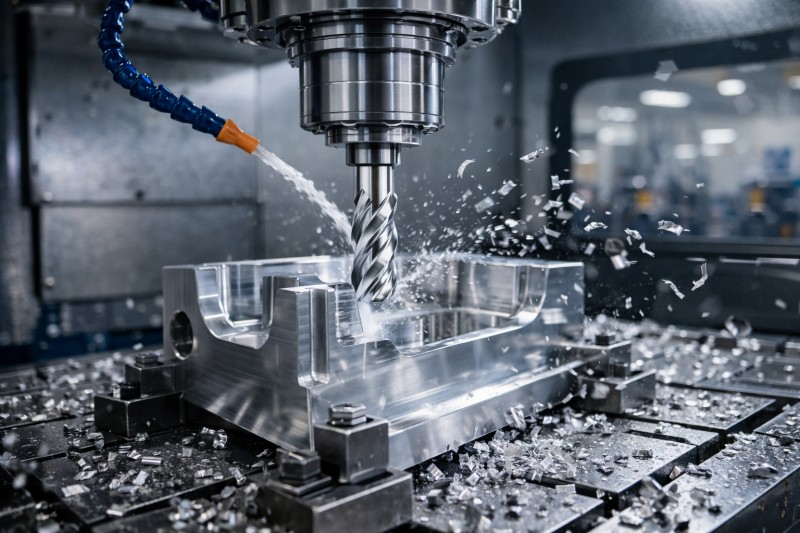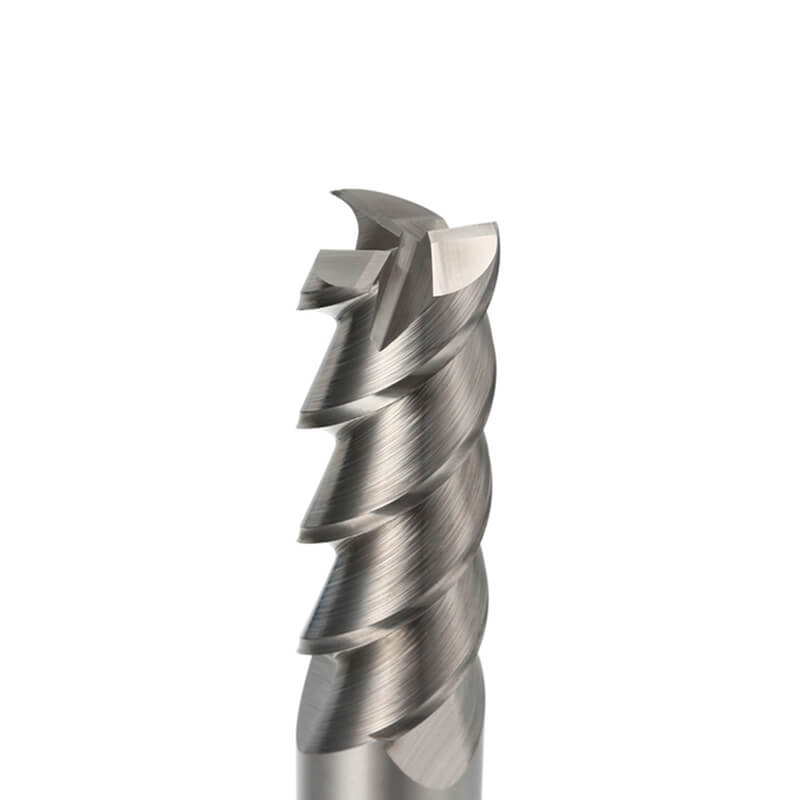
AEX Series End mill for aluminum
Square End Mill for Aluminum Machining | AEX Series
Range reference: KVX-013
- workpiece material
- Aluminum; Aluminium-silicon alloy; Copper alloy; Magnesium alloy
- application type
- Roughing
- flute type
- Square
- Coating
- No Coating or DLC
• Designed for aluminum slotting, side milling, pocket machining, and flat surface milling • Imported carbide rod with 0.8 μm grain size and 10% cobalt content • Uncoated or DLC Rainbow coating available • 6° end rake angle and 12° side rake angle for sharp aluminum cutting • 1200-grit precision-ground cutting edge for smaller burrs and smoother finish • 55% small-core design and 45° helix angle for smooth chip evacuation
Enquire about this tool →Technical data
| Coating Option | Suitable Applications | Selection Considerations |
|---|---|---|
| Uncoated | General aluminum milling, slotting, and applications requiring a sharp cutting edge | Provides a sharp cutting edge without an additional coating layer. Effective chip evacuation and suitable lubrication help control aluminum adhesion and built-up edge. |
| DLC Rainbow | Aluminum milling applications where material adhesion, friction, or built-up edge is a concern | The low-friction DLC coating helps reduce aluminum adhesion and supports chip evacuation and surface quality under suitable cutting conditions. |
Additional technical data
| Machining Need | Why Use AEX Square End Mill |
|---|---|
| Slotting | Square end geometry helps machine straight slots and flat bottoms |
| Side milling | Sharp cutting edge supports clean side walls and stable cutting |
| Pocket machining | Large chip space improves chip evacuation in pocket features |
| Shoulder machining | Square end design helps maintain clear shoulder edges |
| Flat surface milling | Suitable for flat bottom surfaces and general aluminum milling |
| Roughing and semi-finishing | 55% core and 45° helix support smoother chip removal |
Technical notes
- The KERNVEX AEX square end mill is a solid carbide cutter designed for high-speed slotting, side milling, pocket machining, and shoulder milling of aluminum alloys such as 6061 and 7075. It is made from 0.8 μm fine-grain carbide with 10% cobalt and features a 45° helix angle, 55% core diameter, 6° end rake angle, and 12° side rake angle. Uncoated and DLC Rainbow coated versions are available.
- Its positive rake geometry and 1200-grit precision-ground cutting edge are designed to support sharp cutting, smooth chip evacuation, and reduced cutting resistance. The square cutting profile is particularly suitable for slots, flat-bottom pockets, straight sidewalls, and defined shoulders.
- For thin-wall aluminum components, the AEX square end mill can be used with controlled cutting engagement, short tool overhang, and stable workholding to help limit wall deflection and chatter. Actual performance depends on wall thickness, tool size, cutting parameters, and machine rigidity.
- Fine-Grain Carbide Material
- The KERNVEX AEX square end mill is manufactured from fine-grain carbide rods with a 0.8 μm grain size and 10% cobalt content . This carbide substrate provides a balance of hardness, toughness, and wear resistance for aluminum alloy and non-ferrous material machining.
- Positive Rake Geometry
- The AEX square end mill features a 6° end rake angle and a 12° side rake angle . This positive rake geometry is designed to support sharp cutting, lower cutting resistance, and reduced burr formation during aluminum slotting, side milling, and pocket machining.
- Precision-Ground Cutting Edge
- The cutting edge is precision-ground using a 1200-grit grinding wheel to support consistent edge sharpness and cutting geometry. A sharp cutting edge helps reduce cutting resistance and supports clean machining and surface quality when appropriate cutting conditions are maintained.
- 55% Core Diameter and 45° Helix Angle
- The AEX square end mill features a 55% core diameter and a 45° helix angle . The smaller core design allows additional flute space for chip evacuation, while the high helix angle supports smoother cutting and chip flow during aluminum roughing, slotting, and high-speed milling.
- Uncoated or DLC Rainbow Coating
- The KERNVEX AEX square end mill is available in uncoated and DLC Rainbow coated versions. Both options are designed for aluminum machining, but the appropriate choice depends on material adhesion, cutting conditions, chip evacuation, and the required surface quality.
- Uncoated vs DLC Rainbow: Which Is Better for Aluminum?
- Selection Tip: Choose an uncoated end mill when a sharp cutting edge is the main priority and aluminum adhesion is adequately controlled. Consider DLC Rainbow coating when material sticking, built-up edge, or friction affects machining performance. Neither option is universally better for every aluminum alloy or operation.
- Aluminum adhesion is a common challenge during high-speed milling and deep slotting. Learn more in our guide: Why Does Aluminum Stick to an End Mill?
- AEX square end mills are especially suitable for aluminum machining tasks where chip evacuation, edge sharpness, and cutting efficiency are important.
- Suitable materials include:
- •6000 series aluminum alloys
- •7000 series aluminum alloys
- •Aluminum-silicon alloys
- •Magnesium alloys
- •Engineering plastics
- For 6061 aluminum machining, sharp cutting edges and smooth chip evacuation are important for reducing burrs and improving surface finish. More selection details can be found in: Best End Mill for 6061 Aluminum
- For harder aluminum alloys such as 7075, coating selection, tool rigidity, and cutting parameters become more important. Related guide: Best End Mill for 7075 Aluminum
- For users comparing flute designs in aluminum milling, this guide may also help: 2 Flute vs 3 Flute End Mill for Aluminum
- Typical applications include:
- •Aluminum slotting
- •Pocket machining
- •Shoulder machining
- •Flat surface milling
- •Aluminum roughing
- •Semi-finishing of aluminum parts
- •High-speed CNC milling of aluminum components
- •Aerospace, automotive, electronics, mold, and precision machining applications
- Thin-Wall Aluminum Milling and Chatter Control
- Thin-wall aluminum components, especially those made from 6061 and 7075 alloys, can deflect or vibrate when cutting forces are too high. This may lead to chatter marks, dimensional errors, burr formation, and inconsistent surface finish.
- The AEX square end mill uses positive rake geometry, a 45° helix angle, and a 55% core diameter to support lower cutting resistance and efficient chip evacuation. These features make it a suitable option for thin-wall side milling when tool engagement and workholding are properly controlled.
- Recommended machining practices:
- • Leave a consistent finishing allowance after roughing.
- • Use controlled radial engagement to limit cutting forces and wall deflection.
- • Minimize tool overhang and use rigid, accurate toolholding.
- • Support thin sections with suitable fixtures or workholding methods.
- • Maintain effective chip evacuation to prevent chip recutting.
- • Adjust spindle speed, feed, and cutting depth according to wall thickness, tool diameter, and machine stability.
- For thin aluminum walls, a sharp cutting edge alone cannot eliminate chatter. Toolpath strategy, cutting engagement, workholding, and machine rigidity must also be considered.
Technical illustrations and dimension data